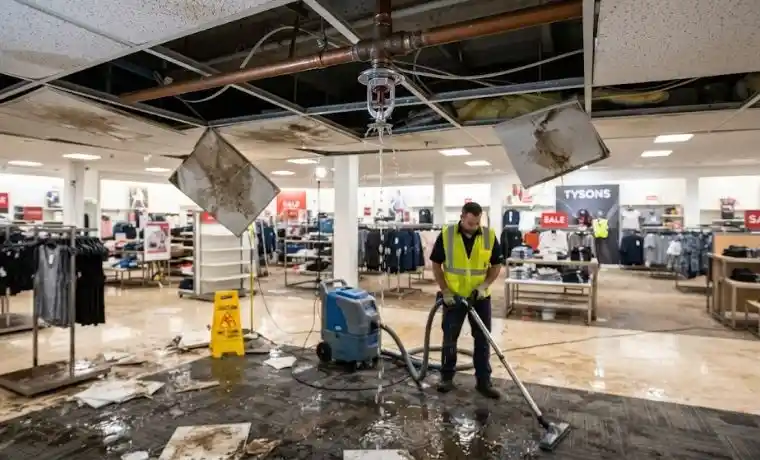
Start with the fact the movies get wrong: sprinkler heads open one at a time. Each head holds a heat-sensitive element, a glass bulb or fusible link, and only the head that reaches its rated temperature discharges. The building does not rain. What actually happens is worse in its own way: one head over one workstation or one condo kitchen releases water continuously, commonly in the range of fifteen to twenty-five gallons per minute for a standard head, until someone finds the riser room and closes the right valve. Ten minutes of that is a few hundred gallons delivered to one point of a building that was dry at lunch.
Why Sprinkler Water Is Not Clean Water
The water that comes out first has been standing in black steel pipe since the system was charged, sometimes for years. It arrives dark, carries pipe scale and sediment, and stains everything it touches. Under the IICRC S500 framework it is handled as contaminated rather than clean, which changes decisions about carpet, fabric partitions, ceiling tiles, and anything porous in the discharge zone. Treating a sprinkler loss like a broken supply line is the most common mistake we see in buildings that tried to handle the first day themselves.
What Sets Heads Off When There Is No Fire
Heat sources placed too close: portable heaters, kitchen equipment, halogen work lights during a build-out. Impact: a ladder, a pallet, a moving crew in a corridor. And in Northern Virginia winters, freezing. Wet-pipe systems in unheated or under-heated spaces, attic runs, parking garage transitions, and vacant suites can freeze, split a fitting, and discharge when the ice lets go. If your building has sprinkler runs through spaces that get cold, that risk belongs on the winter checklist, and our crews flag exposed runs when we see them on a loss.
The Response That Limits the Damage
A sprinkler discharge is a race between water volume and shutoff time, and then a second race between saturation and extraction. When you call (571) 741-6292, dispatch confirms whether the system is isolated and whether the fire marshal or alarm company has been notified, since a discharged system usually means an alarm event and the system must be restored to service afterward. On site the sequence is the standard four steps: stabilize the property, with power isolated in the discharge zone; extract, fast and completely, because sediment-laden water stains harder the longer it sits; dry against a moisture map that includes the ceiling plenum and adjacent suites; restore and document with photos and daily readings.
Offices, Condos, and the Floors Below
In commercial suites the discharge zone is usually obvious and the hidden damage is not: water crosses the ceiling grid, follows conduit and cable tray, and appears two suites over or one floor down. Electronics and paper records in the plume need triage in the first hours. In residential towers and the mixed-use buildings around Tysons, one discharged head becomes a stacked-unit event, and everything on our water damage from the unit above page applies straight down the line. Either way the drying plan covers every assembly the water reached, not just the room where the head opened.
After the Water: Getting the System Back
We are a restoration contractor, not a sprinkler contractor, and we keep that line clean. Head replacement and system recharge belong to your fire protection company and, where required, the inspections that follow. What we deliver is the dried, documented building they can recertify into: extraction complete, assemblies at dry standard, discharge staining addressed, and a file that shows the insurer exactly what fifteen minutes of open head actually cost.
The First Thirty Minutes: A Building Playbook
Buildings that come through sprinkler discharges cheaply share three habits. First, people know where the riser room is and who holds the key, because the single largest variable in these losses is minutes-to-shutoff, and searching for a key at two in the morning is how a hundred-gallon event becomes a thousand-gallon one. Second, someone photographs the scene during and immediately after the discharge, which later answers every question about how far water traveled before extraction began. Third, the call to (571) 741-6292 happens while the water is still being shut off rather than after a night of deliberation, because extraction speed is the second variable and it is entirely controllable.
Property managers can bank all three habits in advance: post the riser room location and after-hours key contact where staff will find them, add our dispatch number to the emergency sheet, and walk new building staff past the shutoff once. None of it costs anything, and the difference shows up in the scope of the loss you eventually file. The rest of the outcome is on us. Commercial losses with downtime exposure should also read commercial water damage restoration for how phased drying keeps a business running. The response starts at (571) 741-6292, any hour.
Sprinkler Discharge Questions
Head Discharged and Water Standing?
Sediment-laden water stains harder every hour it sits. Call now; extraction speed decides what gets saved.
(571) 741-6292