The stain on your ceiling is the end of the story, not the beginning. By the time drywall shows a ring, water from the unit above has already traveled through the floor assembly, followed the path of least resistance along joists or through slab penetrations, and soaked material you cannot see from below. In Fairfax condos and apartments this is the single most common loss we respond to, and the calls to (571) 741-6292 almost always start the same way: it is coming from upstairs, and nobody is home up there.
How Water Actually Moves Between Units
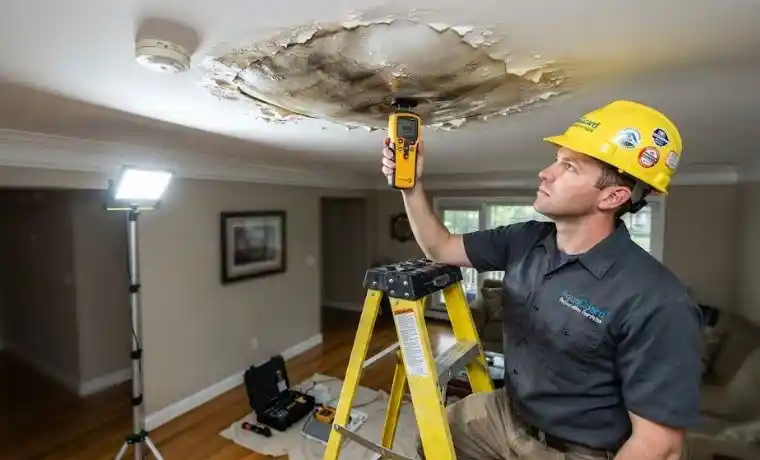
Stacked buildings stack their plumbing. Kitchens sit over kitchens, baths over baths, and the risers and drain lines run in shared chases that connect every floor. When a supply line, appliance hose, or tub overflow lets go upstairs, water follows those chases and the penetrations around them: recessed light cans, sprinkler drops, bath fans, the gap around a drain stack. Gypsum board then wicks water sideways and upward by capillary action, so the wet area inside the ceiling is reliably larger than the stain you can see. Mapping that hidden spread with moisture meters and thermal imaging is the first real task on every one of these losses.
The First Hour, From Your Side of the Ceiling
Photograph everything before anyone touches it: the stain, dripping fixtures, affected belongings, standing water. Move what you can out from under the wet area, and if water is near light fixtures, kill those circuits. Notify building management or the association right away, because they hold the master keys and the authority to enter the source unit when nobody answers the door. Then call (571) 741-6292. A dispatcher will walk you through the rest while a crew is en route, including whether the ceiling needs controlled relief holes to stop water from pooling above the drywall.
Who Pays Is a Question. Who Dries Is Not.
Virginia condominiums operate under the Virginia Condominium Act, and each association's declaration divides responsibility between unit owners and the association for common elements. Where the line falls for your building is a question for the declaration and the people who interpret it, not for a restoration crew, and we stay firmly out of that lane. What we control is the part that cannot wait: water spreading through two or three units does not pause while responsibility gets sorted. We dry the loss correctly and document it so thoroughly that whoever ends up responsible has a clean, neutral record to work from.
Garden Condos and High-Rises Fail Differently
The garden condo stock around Fairfax Circle and Annandale, much of it built between the 1960s and 1980s, combines wood-frame floor assemblies with original copper. Wood framing absorbs water and holds it, so drying takes longer and hidden mold risk runs higher. The concrete high-rise and mixed-use stock in the Tysons corridor sheds water faster but channels it further: one failed washing machine hose on the fourteenth floor can show up in the lobby ceiling. Same loss type, completely different drying plans, and we build the plan around the assembly in front of us.
What the Crew Actually Does
Stabilize the property: source confirmed off, power isolated where water reached it, ceilings relieved before they collapse. Extract and dry: standing water out of both units, drying equipment set against the moisture map on both sides of the floor assembly, because drying only the lower unit leaves the wet middle to feed mold after water damage. Restore and document: materials repaired, daily readings to dry standard, and a file with photos, readings, and scope that both owners and the association can rely on. One number starts all of it: (571) 741-6292.
Contents, Flooring, and What Can Be Saved
What survives a stacked-unit loss is mostly decided by hours. Furniture on carpet wicks water up its legs and skirts; getting pieces onto blocks or out of the wet zone in the first hour changes their odds completely. Hardwood in the lower unit has a save window measured in a day or two before cupping sets, and specialized floor-drying systems only help if they start inside that window; the details live on our hardwood floor water damage page. Electronics under the drip line should be powered off and left off until assessed. Documents, photographs, and anything paper freeze or deteriorate on their own schedule and get triaged early.
Category matters too. Water that left the upstairs unit clean does not arrive clean; passing through a floor assembly picks up whatever lives in the cavity, and overflow from a fixture may have started gray to begin with. The category assessment on arrival decides what porous materials can be dried in place and what gets documented and removed. It is not a judgment call we improvise; it follows the same standard on every loss, and the reasoning lands in your file. When contents you care about are sitting under an active drip, say so on the call to (571) 741-6292 and the crew stages protection first.
Unit-Above Water Damage Questions
Ceiling Wet Right Now?
Water above drywall does not wait for access disputes. Call and we will start stabilizing from your side while entry to the source unit gets arranged.
(571) 741-6292