
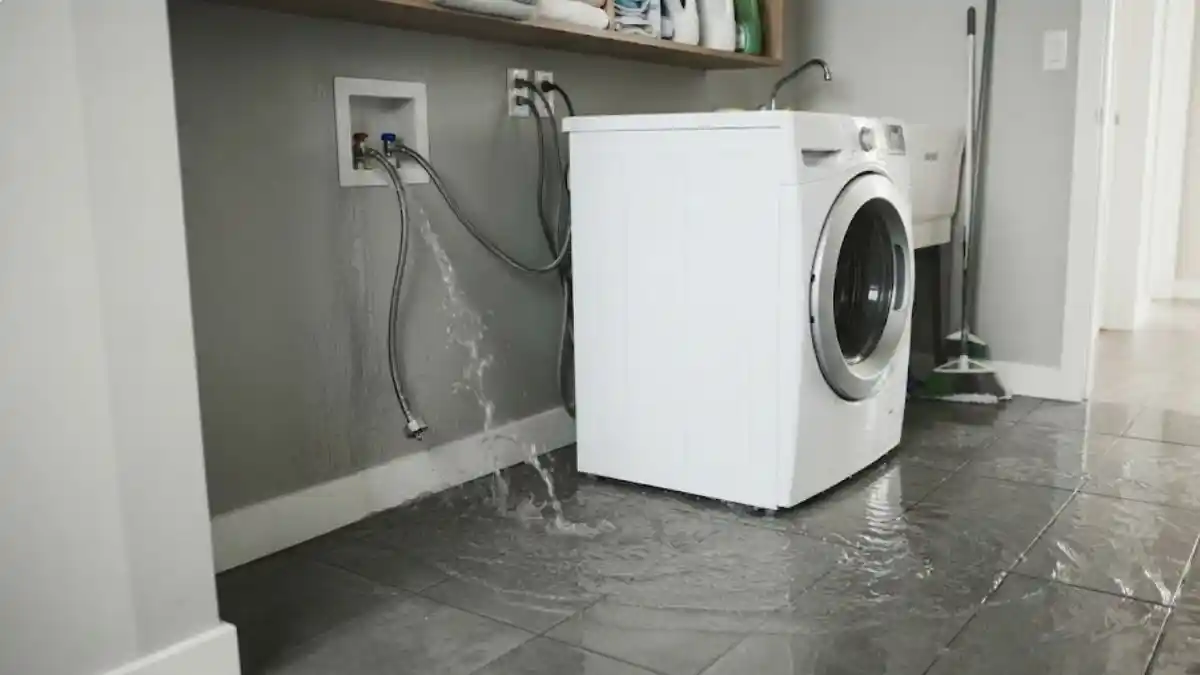
Appliance Flood | Condo | Unit-Above Water Damage
Appliance Flood in a Fairfax High-Rise: Washer, Dishwasher, and Water Heater Scenarios
- Fairfax Restoration Crew
Appliance floods in Fairfax County condominiums follow significantly different spread patterns depending on whether the building is concrete-slab construction (common in 1990s and newer mid-rise and high-rise buildings in Tysons, Merrifield, and Reston Town Center) or wood-frame construction (common in 1960s-80s garden condos in Annandale, Reston's Lake Anne area, and Fairfax Circle). Understanding the difference is relevant because it determines how quickly water reaches the unit below and through what pathways it travels.
Concrete-Slab High-Rise Buildings: Fast, Wide Spread
In a concrete-slab Tysons or Merrifield high-rise, your flooring sits directly on the concrete slab (or on a thin floated layer). When an appliance releases water on that slab, it spreads across the entire floor plane instantly - there is no subfloor cavity to contain it. It finds every floor penetration: electrical conduit sleeves, plumbing pipe penetrations at the kitchen supply and drain, HVAC ducts, and the gap around the bathtub drain assembly. Through these penetrations, water enters the floor-ceiling assembly between your slab and the ceiling of the unit below. In a concrete-slab building, the unit below can see water through their ceiling within 5 to 15 minutes of a washing machine supply line failure above them.
A 3/8-inch washing machine supply line releases approximately 3 gallons per minute at full supply pressure. A 30-minute event before the occupant discovers it and shuts off the supply deposits 90 gallons on your slab - enough to saturate a significant radius of the floor plane and drive substantial water into the unit below. Call (571) 741-6292 immediately when you discover any appliance flood in a high-rise condo.
Wood-Frame Garden Condos: Slower but Hidden Migration
In a 1960s or 1970s wood-frame Annandale or Reston garden condo, water from a washing machine failure on the main floor deposits on a wood subfloor that sits on wood joists above the unit below's ceiling drywall. The wood subfloor absorbs and retains water, slowing the initial downward migration compared to concrete. However, once the subfloor is saturated - which happens faster than you might expect - water wicks into the joist bays and into the insulation between the joists, traveling horizontally before it finds a penetration to move downward. The unit below may not see water for 30 to 60 minutes after the event begins, but when it arrives, it may appear across a wide area of their ceiling rather than in a concentrated spot.
For wood-frame construction, above-ceiling moisture mapping in the unit below is essential to establish the true extent of saturation in the joist bay. The visible ceiling stain in the unit below represents the last location water exited the assembly, not the full area that is saturated. Call (571) 741-6292 for appliance flood events in Fairfax County garden condos.
Water Heater Failure: The Volume Event
A water heater tank failure - where the tank itself ruptures rather than a connection failing - releases the full tank volume essentially instantaneously. A 50-gallon tank deposits 50 gallons in a utility closet before you can close the supply valve. In a concrete-slab high-rise, 50 gallons on a slab in a utility closet finds every penetration path in that floor area simultaneously. Thermal imaging of the unit below's ceiling after a water heater tank failure in a Tysons or Merrifield high-rise consistently shows water spread well beyond the utility closet footprint. Call (571) 741-6292 for water heater events in Fairfax County condo buildings.
Your Liability to the Unit Below
If your appliance caused water damage to the unit below, your HO-6 policy's liability section is the coverage that pays for their damage. You are not paying out of pocket - your insurer pays and then coordinates with their insurer as needed. What matters for your position: notify your HO-6 insurer promptly after discovering the event, do not make any statements about coverage or fault to the neighbor's insurer before talking to your own, and ensure that documentation of the source location is established at the time of assessment. We produce per-unit documentation that serves both units' claims independently. See Water Damage Insurance Claims and our HOA vs. Owner Responsibility Checker. Call (571) 741-6292.
Questions about your situation? Call (571) 741-6292 - Fairfax Restoration Crew serves commercial properties, condos, and multi-unit buildings across Fairfax VA, Fairfax County, and Northern Virginia.