Biohazard Water - Category 3
Sewage backup is not a water damage situation that requires faster cleanup - it is a biohazard situation that requires a fundamentally different response protocol. Category 3 water (which includes all sewage-contaminated water, regardless of how it entered the space) may contain coliform bacteria, hepatitis A, norovirus, Salmonella, and other pathogens at concentrations that pose genuine infection risk to anyone who contacts the affected materials without appropriate PPE. This is the category where standard water damage crews reach the limit of their equipment and training. Call (571) 741-6292 for sewage backup situations in Fairfax VA, Fairfax County, and surrounding Northern Virginia.
Category 3 Water - What It Is and Why It Is Different
Under IICRC S500 standards, water is classified by its contamination level at the point of contact with the structure. Category 3 ("black water") includes sewage, rising floodwater, and water that has contacted areas with high contamination potential. Once water from any source contacts sewage-affected surfaces, all of that water is classified Category 3 for remediation purposes - the contamination spreads with the water. A toilet overflow that deposits three gallons on a bathroom floor can result in Category 3 contamination across a much larger area if the water migrates under the floor tile, through the subfloor, and into the space below.
Sewage Event Types in Fairfax County Buildings
| Event Type | Common Setting | Scope Complication |
|---|---|---|
| Toilet overflow (blockage or tank failure) | Residential condo, office restroom, multi-unit building | Water migrates rapidly under tile; Category 3 contamination reaches subfloor and floor-ceiling assembly below within minutes |
| Main sewer line backup (drain surge) | Basement floor drains, first-floor bathrooms in buildings with shared lateral | Multiple fixtures may back up simultaneously; affected area is often the lowest floor; volume can be significant |
| Shared sewer stack backup (multi-unit building) | Older garden condos, Annandale and Springfield 1960s-70s stock | A blockage in the shared stack can affect multiple units simultaneously; HOA notification and plumber coordination required before restoration begins |
| Grease trap or food-service drain backup | Commercial kitchen, food court, restaurant in mixed-use building | Combined sewage and grease contamination; Category 3 plus additional FOG (fats, oils, grease) remediation protocol |
The Sewage Cleanup Protocol - Step by Step
Step 1: Containment
Before containment work begins, call (571) 741-6292 to confirm crew is en route.
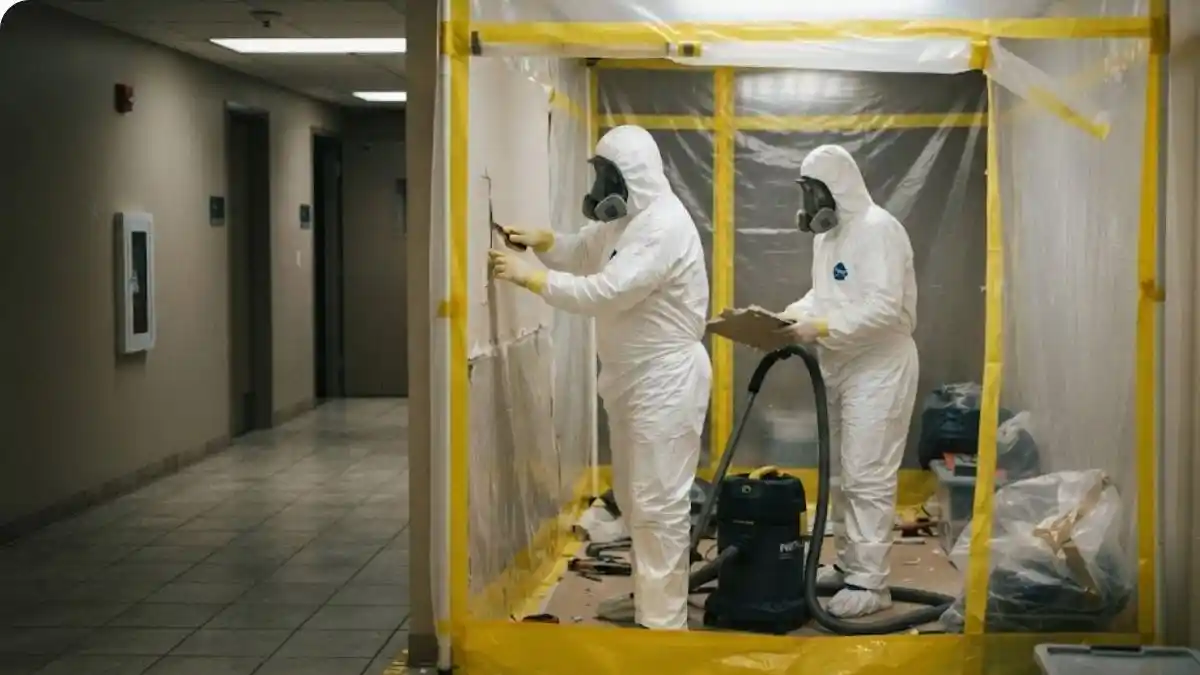
Before any extraction begins, the affected area is isolated with physical barriers and negative air pressure where the configuration permits. This prevents cross-contamination - tracking Category 3 material through unaffected areas on shoes, equipment wheels, or airflow. HVAC systems serving the affected zone are shut off or isolated if possible; Category 3 material contacting HVAC surfaces creates a secondary remediation scope in the ductwork that is far more expensive than the primary event.
Step 2: Extraction in Full PPE
Crew members enter the affected area in appropriate personal protective equipment: Tyvek coveralls, gloves (minimum nitrile, double-gloved for sewage events), respiratory protection (at minimum N95 for sewage events; full-face respirator if spray or aerosolization risk is present), and boot covers. Category 3 water is extracted and disposed of as contaminated liquid waste - not discharged to a storm drain or onto property. All extraction equipment that contacts Category 3 water is decontaminated before leaving the site.
Step 3: Porous Material Assessment and Removal
Under IICRC S500, porous materials that have absorbed Category 3 water should generally be removed rather than dried in place. This includes carpet and pad (always remove), drywall to the flood line plus an additional 12 inches above the visible saturation (moisture wicks upward beyond the wet line), insulation (remove and bag as contaminated waste), and any other absorptive material that cannot be surface-cleaned and verified clean by ATP testing. The decision on specific materials is made by our technician based on contact time and degree of saturation - not by a blanket rule. Hard, non-porous surfaces (ceramic tile, porcelain fixtures, concrete that can be fully surface-cleaned) may be decontaminated in place.
Step 4: Antimicrobial Treatment and Surface Cleaning
Exposed structural surfaces - concrete, masonry, framing lumber - are cleaned with EPA-registered disinfectant applied at label-specified concentrations and contact times. The cleaning sequence matters: surfaces must be cleaned before they are disinfected (organic material inhibits disinfectant activity). A second antimicrobial application follows the initial cleaning. All surfaces receiving treatment are documented by location and product used.
Step 5: ATP Surface Testing
ATP (adenosine triphosphate) surface testing is a rapid post-cleaning verification method that measures the presence of organic material on surfaces - a proxy for biological contamination. Clean surfaces should produce low ATP readings after decontamination. We test representative surfaces in the affected area after cleaning is complete. High ATP readings indicate that additional cleaning is required in that location. This testing record is included in the documentation package for your insurance claim.
Step 6: Structural Drying
Once contamination remediation is complete and verified, structural drying of exposed framing, concrete, and masonry begins - same protocol as any water damage event. Drying equipment is positioned after decontamination is verified, not during the contamination phase. The drying timeline from this point is driven by the same moisture readings and psychrometric targets as any other Category designation.
Multi-Unit Building Sewage Events
Sewage backup in a multi-unit condo or apartment building introduces coordination requirements beyond the physical cleanup. The plumber must clear the blockage before restoration can be complete (water will return if the drain is not functioning). The HOA or property manager must be notified, both for access purposes and because the shared sewer stack may be a common element under the master policy. If multiple units are affected, each unit's scope is documented separately. See our Sewage Backup in a Fairfax Multi-Unit Building: Category 3 Water and Why It's Different guide for a property-manager focused walkthrough. For insurance documentation on this type of event, see Water Damage Insurance Claims.
What to Do While Waiting
- Keep people and pets out of the affected area
- Turn off HVAC serving the affected space if you can do so safely
- Do not run fans - you may aerosolize contaminated material
- Do not use the toilet, sink, or any drains connected to the blocked line
- Take photographs of the affected area from the doorway (do not enter) - this documentation matters for your claim
- Call your property manager or HOA if this is a shared-stack event in a multi-unit building
- Call (571) 741-6292
Sewage Backup FAQ
-
Sewer or drain backup is typically not covered by a standard homeowner's policy - it requires a separate endorsement or rider. Check your policy or call your agent before assuming coverage. For condo owners, the source matters: if the backup originated in the shared sewer stack (a common element), the HOA master policy may cover structural repairs; your HO-6 policy covers your interior finishes and personal property if you have the appropriate coverage. For commercial properties, sewer backup coverage is a separate endorsement on most commercial property policies. Call (571) 741-6292 - we can provide the documentation your carrier needs regardless of the coverage outcome.
-
Generally no, if the drywall has absorbed Category 3 water. Drywall is gypsum-core with paper facing - both are porous and absorptive, and cannot be surface-cleaned to safe standards once sewage-contaminated water has penetrated the paper and core. The standard protocol is removal at the flood line plus 12 inches above the visible saturation line, to ensure the framing behind the drywall is fully accessible for cleaning and drying. This is not a conservative call - it is the documented remediation standard under IICRC S500 for Category 3 events.
-
Ceramic and porcelain tile surfaces themselves can be surface-cleaned and decontaminated. However, grout joints between tiles are semi-porous; Category 3 water wicks into grout and may require aggressive cleaning or grout removal depending on contact time. The more significant question is what is under the tile: if the tile is set in a mortar bed over a concrete slab, the grout/subfloor interface should be assessed for water penetration. If the tile is set over a plywood subfloor, the subfloor is porous and typically requires removal. Our assessment covers the materials below the surface finish, not just the surface itself.