
Appliance & Mechanical Failures
Appliance-related water events are among the most common water damage calls in Fairfax County condos and multi-unit buildings - and among the most deceptive in scope. A washing machine supply hose that fails behind the machine, or a dishwasher drain that backs up during a cycle, can deposit 20 to 50 gallons of water on a kitchen or utility room floor before the occupant realizes what has happened. In a multi-story building, that water reaches the unit below within minutes - through floor penetrations, electrical conduit paths, and the subfloor assembly. Call (571) 741-6292 for appliance and mechanical water events in Fairfax VA, Fairfax County, and Northern Virginia.
Appliance Flood Events - By Appliance Type
Washing Machine - Supply Line and Overflow Events
Washing machine supply hoses - especially the older braided PVC type - are one of the highest-failure-rate plumbing connections in residential buildings. They operate under full supply pressure whenever the machine is plumbed in, regardless of whether it is running. A supply hose failure deposits water at full supply-line pressure until someone closes the valve - potentially hundreds of gallons if the failure occurs while the occupant is away. The water is Category 1 (clean supply water) at point of failure; it may degrade to Category 2 if it contacts the washing machine's drain water or the flooring beneath the machine. In a condo setting, the laundry closet is typically located directly above the same space in the unit below, making downward spread immediate. Call (571) 741-6292 for washing machine flooding events.
Dishwasher - Drain Backup and Door Seal Failures
Dishwasher water events are typically lower volume than washing machine failures but spread rapidly under finished cabinetry - under the toe-kick, through the cabinet base, and along the subfloor toward adjacent spaces - before any visible pooling appears on the kitchen floor. The water from a dishwasher drain backup is Category 2 (grey water from the drain cycle). In kitchen-to-kitchen stacked layouts common in Fairfax County's 1990s and 2000s condo stock, the water reaches the ceiling of the unit below through the electrical conduit path at the dishwasher's power connection.
Refrigerator Ice Maker - Supply Line Failure
Refrigerator ice maker supply lines - typically 1/4-inch copper or braided poly - are routed along the floor behind the refrigerator and are frequently kinked, pinched, or degraded by repeated movement of the appliance. Failure deposits water at the back of the refrigerator, which then migrates across the kitchen floor under appliances and cabinets. Because the refrigerator conceals the failure point, these events often run overnight before detection. Volume is limited by the small line diameter but can still total 20 to 50 gallons by discovery. Call (571) 741-6292 for refrigerator line failures and kitchen water events.
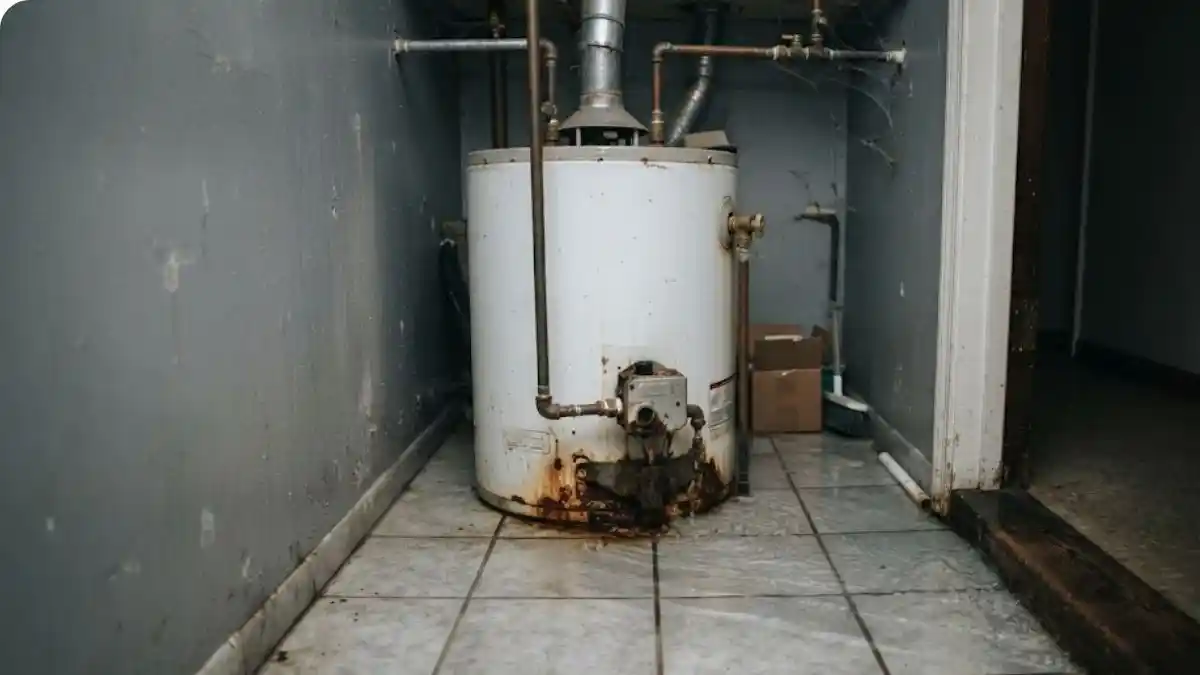
Water Heater Rupture - Tank Failure vs. Connection Failure
Water heater water events fall into two categories with significantly different volume profiles. Connection failures - at the cold supply inlet, hot water outlet, or pressure relief valve - release water at the point of failure and can typically be stopped quickly by closing the supply valve to the heater. Tank failures - where the tank itself has rusted through at the base - release the full tank volume (40 to 80 gallons for typical residential and condo units; 100 to 500 gallons for commercial units) essentially instantaneously, and then continue to add water as the supply valve refills the failing tank until someone closes the supply.
A 50-gallon water heater failure in a utility closet in a Tysons or Reston mid-rise condo deposits that volume in a confined space - the water spreads under the closet door, across the hallway, and into adjacent rooms before reaching any perimeter drain. In a concrete-slab construction building, the water spreads across the slab and finds every floor penetration and electrical conduit path leading down. Thermal imaging of the ceiling in the unit below typically reveals a pattern significantly larger than the utility closet footprint. Call (571) 741-6292 for water heater failures in condos and commercial buildings.
Boiler and Radiator Events
Hydronic heating systems - hot water boilers with radiators or baseboard units - are present in a portion of Fairfax County's older commercial buildings and some pre-1970s residential and condo stock in Annandale, McLean, and Falls Church. Boiler water events typically involve: supply or return line failures at radiator connections (corroded fittings, failed packing at valves), boiler pressure relief valve discharge (system over-pressure event), or heat exchanger failure (less common, typically indicates end-of-life boiler). The water from a hydronic system that has been in service for years contains dissolved scale, corrosion byproducts, and treatment chemicals - it is Category 2 water even though it originated from a closed system. Call (571) 741-6292 for boiler and radiator water events.
Multi-Unit Spread - When Your Appliance Affects the Unit Below
In Fairfax County condos and multi-unit buildings, appliance water events in one unit regularly produce ceiling damage in the unit below - the scenario covered in detail on our Ceiling & Unit-Above Water Damage page. From the appliance owner's perspective, the key steps are: stop the appliance source immediately, notify your building's property manager and the occupant below, document the event with photographs, and call (571) 741-6292 for scope assessment of both units.
Your HO-6 policy's liability section typically covers damage you cause to neighboring units through an appliance event - your insurer pays for the damage to the unit below as well as your own interior, subject to your liability limits and policy terms. Negligence determinations (failure to maintain appliances, awareness of a prior leak without repair) can affect coverage; consult your insurer. The documentation we produce covers both units' damage simultaneously. See Water Damage Insurance Claims for the multi-party documentation process, and use our HOA vs. Owner Responsibility Checker for the policy responsibility framework.
Appliance Flood FAQ
-
Yes. The floor surface drying does not mean the subfloor and cabinet bases below dried - those materials absorb water and retain it well after the surface appears dry. Dishwasher events in particular spread under the toe-kick and cabinetry where surface evaporation cannot reach. Residual moisture in cabinet bases and subfloor creates ideal mold conditions within 48 to 72 hours. A moisture meter assessment takes 30 minutes and confirms whether the materials below the visible surface have returned to safe moisture content. Call (571) 741-6292.
-
The demolition scope depends on what materials were saturated and for how long. Drywall that has absorbed water for more than 24 to 48 hours typically needs to come out. Drywall wet for less time may be salvageable with in-place drying if the framing and insulation behind it are not fully saturated. Concrete floors can usually be dried without demolition. Finished flooring (tile, vinyl, or hardwood) over concrete is assessed material by material. We make these decisions based on moisture readings at your specific walls and floor, not on a default scope. Call (571) 741-6292 for assessment.
-
Generally yes, if the flood originated from your appliance - your HO-6 policy's liability section exists for exactly this situation. The unit owner below should file a claim with their own HO-6 insurer, who will then subrogate against your liability coverage. You should notify your own insurer of the event promptly. The documentation we produce at assessment covers both units and is provided to both insurers. This is not a legal determination - consult your insurer and if necessary an attorney for the specific coverage and liability questions. Call (571) 741-6292 to start the physical restoration and documentation.