
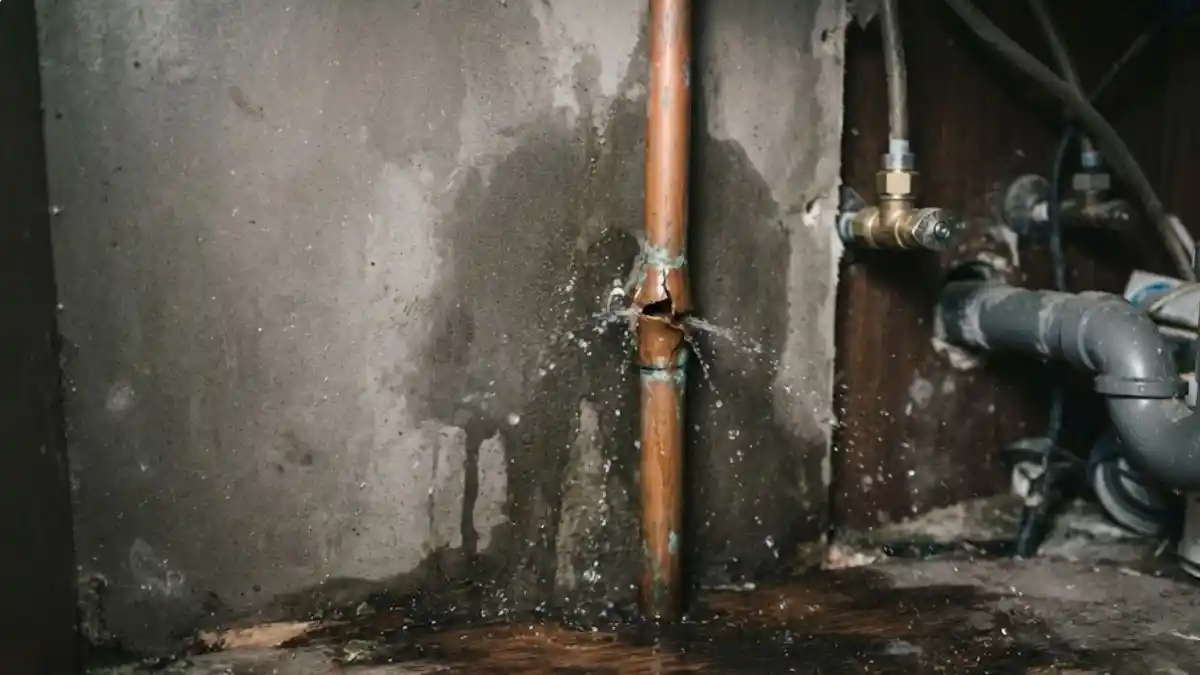
Burst Pipe | Vacancy Damage | Fairfax County
Burst Pipe in a Fairfax Condo During Winter Travel: What to Expect When You Return
- Fairfax Restoration Crew
Returning from a week of winter travel to find your Fairfax County condo flooded is one of the more traumatic property experiences a condo owner faces. The immediate visual impact - water staining, saturated flooring, displaced belongings - does not accurately represent the full scope of the damage. Water that has been running undetected for days has migrated into structural assemblies, through floor penetrations into the unit below, and potentially through wall cavities into adjacent units. Understanding the stages of what happened while you were away helps set realistic expectations for the restoration process.
How Vacancy Damage Differs from a Discovered Event
When a pipe fails and is discovered within hours, the restoration crew extracts standing water before it has fully saturated the structural assembly. Drywall has absorbed moisture from one face only; framing lumber has surface moisture but is not saturated through; flooring shows water exposure but may be recoverable. Call (571) 741-6292 within a few hours of a pipe failure and the scope is often contained to one or two rooms.
When the same pipe fails and runs for 72 hours - a typical short-trip scenario in a vacant condo - the picture is different. A 3/8-inch supply line at average residential pressure releases approximately 3 gallons per minute. Over 72 hours, that is over 12,000 gallons. In a typical 1,000-square-foot condo, that volume saturates every porous material on the floor plane, migrates through multiple floor penetrations into the unit below, wicks up drywall to heights well above the visible waterline, and may have been sitting long enough to begin mold colonization in hidden spaces.
The Stages of What Happened While You Were Away
Hours 1-4: The pipe fails and water begins flowing. Depending on the failure point, water may flow onto a hard surface (tile, concrete subfloor) and spread across the floor plane toward the lowest point. Standing water begins to form. The water is Category 1 (clean supply water) at this stage.
Hours 4-12: Standing water depth increases. Water begins to wick up drywall through capillary action - the visible waterline on drywall typically reaches 1 to 2 inches per hour under saturation conditions. Carpet and pad are fully saturated. Water reaches floor penetrations (electrical boxes, HVAC registers, plumbing sleeves) and begins flowing into the unit below. The unit below's ceiling is now receiving water.
Hours 12-48: The water supply for the building may not have been shut off yet - the unit may have run for this full period. Multiple rooms are affected. Water has reached wall cavities through electrical box penetrations and floor-wall junctions. Category 2 conditions begin developing in standing water as microbial activity increases. The unit below may have contacted the property manager.
Hours 48-72+: Mold growth conditions are established in saturated materials in hidden spaces. The water may have been discovered by a neighbor or building manager contacting you by phone. At this point, the scope extends to hidden mold assessment alongside the water damage restoration.
When You Arrive: The First Steps
Before you re-enter: call your property manager from outside to confirm the water supply has been shut off. If it has not, the property manager's engineer needs to close the building riser valve before you enter - additional water is still flowing. Once you confirm the supply is off, photograph and video everything from the doorway before moving anything inside. Call (571) 741-6292 immediately. Call your HO-6 insurer. Then begin moving out of the unit for the restoration period - long-run vacancy damage events typically require full unit relocation for the drying and reconstruction phase, which your HO-6 loss-of-use coverage may pay for.
The Neighboring Unit Issue
If water migrated into the unit below during your absence, that unit owner's property manager has almost certainly already been notified and may have already called a contractor. Your HO-6 liability coverage is what pays for the damage to their unit - your insurer will handle the claim between the two units. What matters for you is that our documentation of the source location, failure timeline, and extent of spread in both units is complete before any repair work begins in either unit. Call (571) 741-6292 and give us both unit addresses when you call.
What to Expect from the Restoration Timeline
A multi-day vacancy pipe failure in a Fairfax County condo typically involves: emergency extraction (day 1), above-ceiling and above-floor moisture mapping (day 1), selective demolition based on the map (days 1-2), structural drying phase (days 3-10 depending on materials and extent), hidden mold assessment if warranted (concurrent with drying), and reconstruction after drying completion. Full timelines from discovery to complete reconstruction for a significant vacancy event run 4 to 8 weeks in most cases. Your HO-6 loss-of-use coverage pays hotel or rental costs during this period, subject to your policy limits. See Burst & Frozen Pipe Cleanup for the full pipe failure restoration protocol. Call (571) 741-6292.
Questions about your situation? Call (571) 741-6292 - Fairfax Restoration Crew serves commercial properties, condos, and multi-unit buildings across Fairfax VA, Fairfax County, and Northern Virginia.