
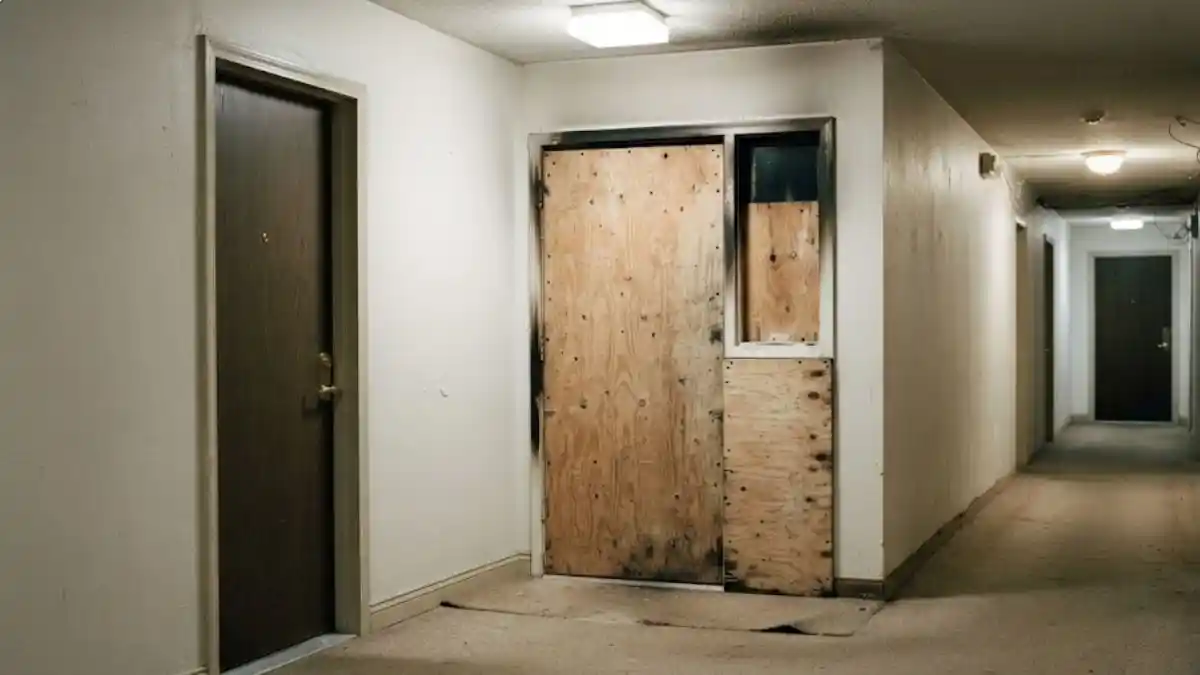
Fire Damage | Multi-Unit | Board-Up
Fire Damage Restoration in Fairfax: What Happens to the Rest of the Building?
- Fairfax Restoration Crew
A fire in one unit of a Fairfax County condo building affects the entire building in ways that are not immediately obvious to occupants of adjacent, above, and below units. Smoke migration, firefighting water runoff, structural assessment requirements, and the fire marshal's access restrictions create a complex multi-party situation that extends well beyond the unit where the fire occurred. This post covers what occupants of non-fire units should expect in the hours and days after a building fire event.
The First 24 Hours: Fire Marshal Control
After a working structure fire in a Fairfax County condo or apartment building, the fire marshal controls re-entry for the entire affected portion of the building - not just the fire unit. Adjacent units, the floor above, and potentially the entire stairwell and elevator lobby serving the affected corridor may be within the restricted area. Occupants are not permitted to re-enter until the fire marshal confirms structural integrity and clears the area. This can take hours or, in significant fires, days.
The fire marshal's clearance for non-fire units typically comes in stages: the corridor may be cleared before individual units; units directly adjacent to the fire unit may require structural engineering sign-off before clearance. Do not attempt to enter a restricted area regardless of what you see other people doing. Contact the building's property manager for updates on clearance status - they are the primary point of communication with the fire marshal's office on building access.
Smoke Migration to Adjacent Units
Smoke from a structure fire does not stay in the fire unit. It migrates through shared wall penetrations, under and around door frames, through HVAC connections, and through ceiling penetrations into adjacent units, the floor above, and common corridors. The smoke that reaches adjacent units is typically dry soot - fine, powdery residue that deposits on surfaces and inside HVAC components.
For occupants of adjacent units: even if your unit shows no visible char and no obvious smoke damage, soot may be present on surfaces throughout your unit in amounts that are not visible to casual inspection but that produce persistent odor and can cause respiratory irritation over time. A professional soot assessment after a neighboring-unit fire is advisable. Your HO-6 policy covers smoke damage to your unit from a neighboring fire as a sudden and accidental event not caused by your negligence. See Smoke & Soot Damage Cleanup. Call (571) 741-6292.
Firefighting Water in Non-Fire Units
Firefighting operations deposit significant water volumes in a structure fire - thousands of gallons in a working multi-unit building fire. That water flows downward through the building. Units below the fire unit may experience ceiling water damage from firefighting water runoff; units on the same floor may experience water intrusion through shared walls and corridor flooding. Firefighting water is Category 3 - it has contacted fire-damaged, soot-coated, and potentially chemically contaminated surfaces. The extraction and drying protocol for firefighting water is the same as other Category 3 events. Call (571) 741-6292 if your unit received firefighting water from an event above or adjacent.
Emergency Board-Up for the Fire Unit and Building
Structural openings created by the fire - broken windows, burned-through door frames, compromised roof sections - must be secured before the building can be left unattended. The property manager and building owner are responsible for emergency board-up of the fire unit and any affected common areas. Individual occupants of adjacent units do not typically need to arrange their own board-up unless their unit's windows were broken by the event. Emergency board-up costs are a covered loss-mitigation expense under most commercial property and homeowner's policies. See Emergency Board-Up. Call (571) 741-6292.
Contents Salvage from Non-Fire Units
Occupants of adjacent units that received smoke or firefighting water damage should not attempt to recover or move contents without professional guidance. Soot on furniture, textiles, and electronics spreads easily when disturbed; water-damaged electronics should not be powered on. Contents assessment at the time of our initial walkthrough determines what can be professionally cleaned and restored versus what must be replaced, and produces the inventory documentation for your HO-6 personal property claim. See Contents Cleaning & Restoration. Call (571) 741-6292.
Questions about your situation? Call (571) 741-6292 - Fairfax Restoration Crew serves commercial properties, condos, and multi-unit buildings across Fairfax VA, Fairfax County, and Northern Virginia.