
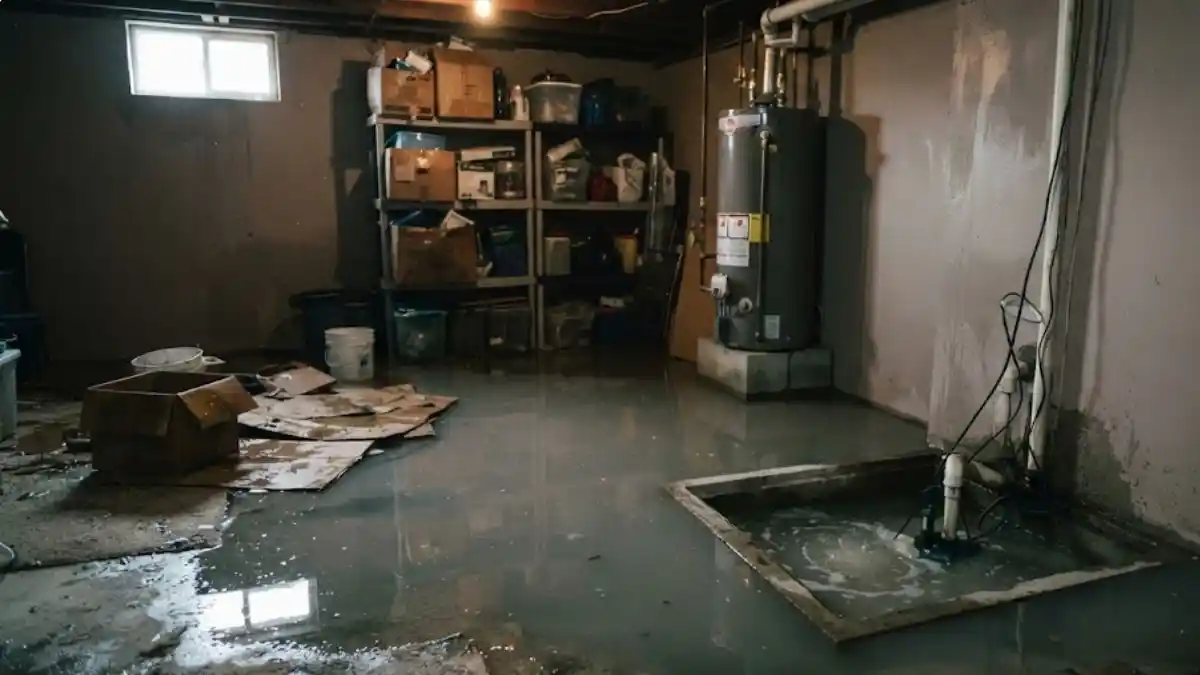
Flooded Basement | Storm Flooding | Fairfax County
Flooded Basement in Fairfax After a Storm: Sump Pump Failure vs. Storm Drain Backup
- Fairfax Restoration Crew
After a significant storm event in Fairfax County, two distinct mechanisms produce flooded basements - and they are not the same situation from a restoration standpoint. Understanding which cause applies to your basement matters because it determines the category of the water, the remediation protocol, and which part of your homeowner's policy (if any) covers the event.
Cause 1: Sump Pump Failure
The sump pump in a Fairfax County basement collects groundwater that accumulates in the sump pit through foundation drainage and weeping tile systems. During a heavy rain event, the pump runs continuously. The most common failure modes during storms are: power loss (the storm knocks out electricity at exactly the moment demand is highest), pump motor overheating from continuous operation, and float switch failure that prevents the pump from activating even when power is available.
When the pump fails, groundwater accumulates in the pit and overflows onto the basement floor. In high-water-table conditions common to Fairfax County's clay-heavy soil, this can happen within 20 to 30 minutes of pump failure during a heavy rain. The water from sump pump failure is typically groundwater that has been filtered through the soil - it is Category 1 at the time of entry, though it degrades over time if left standing. Call (571) 741-6292 immediately for sump failure flooding in Fairfax County. The faster extraction begins, the more material can be saved and the lower the final claim.
Cause 2: Storm Drain Surcharge
When a storm event delivers rain faster than the municipal storm drain system can carry it, the pipes in the storm drain network pressurize - a condition called surcharge. Under surcharge pressure, water backs up through floor drains and other openings connected to the storm drain system, entering basements through drains that normally flow out. This water is Category 3 under IICRC S500 - it has passed through the storm drain system, which carries runoff from roads, parking lots, and other contaminated surfaces. It may also contain sewage from sanitary sewer systems that share capacity with storm drains in older combined-sewer areas.
Storm drain surcharge is most common in Fairfax County's older neighborhoods - portions of Annandale, Fairfax Circle, portions of Springfield near Accotink Creek, and areas along Little River Turnpike - where the storm drain infrastructure was built for lower development intensity than currently exists. The remediation protocol for Category 3 storm drain water is significantly more intensive than for Category 1 sump failure water: specialist PPE, antimicrobial treatment of all exposed structural surfaces, ATP verification testing, and removal of all porous materials that absorbed the contaminated water. See Sewage Backup Cleanup for the Category 3 protocol. Call (571) 741-6292.
| Factor | Sump Pump Failure | Storm Drain Surcharge |
|---|---|---|
| Water category | Category 1 (groundwater) | Category 3 (storm drain water) |
| Entry point | Sump pit overflow | Floor drains, toilet connections |
| Porous material handling | May be dried in place if addressed quickly | Remove porous materials that absorbed water |
| Surface treatment required | Antimicrobial as precaution | Full biohazard decontamination + ATP testing |
| Insurance coverage | Water backup endorsement (not standard) | Water backup endorsement; often excluded without rider |
How to Tell Which You Have
If water entered through the sump pit and the floor drain is dry, it was sump failure. If water came up through floor drains and the sump pit was not the entry point, or if water entered through both, it was likely storm drain surcharge (possibly with concurrent sump failure). If you are not sure - which is common in a stressful post-storm discovery scenario - assume Category 3 until the technician assesses the entry path. Treating Category 3 water as Category 1 is the error that creates health risk; treating Category 1 as Category 3 is overcautious but not dangerous. Call (571) 741-6292 and describe the entry points when you call - we can begin advising on protocol before arrival.
Insurance: What Is and Is Not Covered
Standard homeowner's policies typically exclude groundwater intrusion and storm drain backup from standard coverage. Both require specific endorsements - a "water backup and sump pump failure" rider is the most common. This endorsement is not expensive (typically $50 to $100 per year) and is strongly recommended for Fairfax County homeowners with sump pump basements. If you do not have this endorsement, the restoration cost is out of pocket. We produce the documentation that supports the claim regardless of coverage outcome. Call (571) 741-6292.
Questions about your situation? Call (571) 741-6292 - Fairfax Restoration Crew serves commercial properties, condos, and multi-unit buildings across Fairfax VA, Fairfax County, and Northern Virginia.