
Mold Remediation | Commercial | Property Management
Mold After Water Damage in a Fairfax Office Building: What Property Managers Need to Know
- Fairfax Restoration Crew
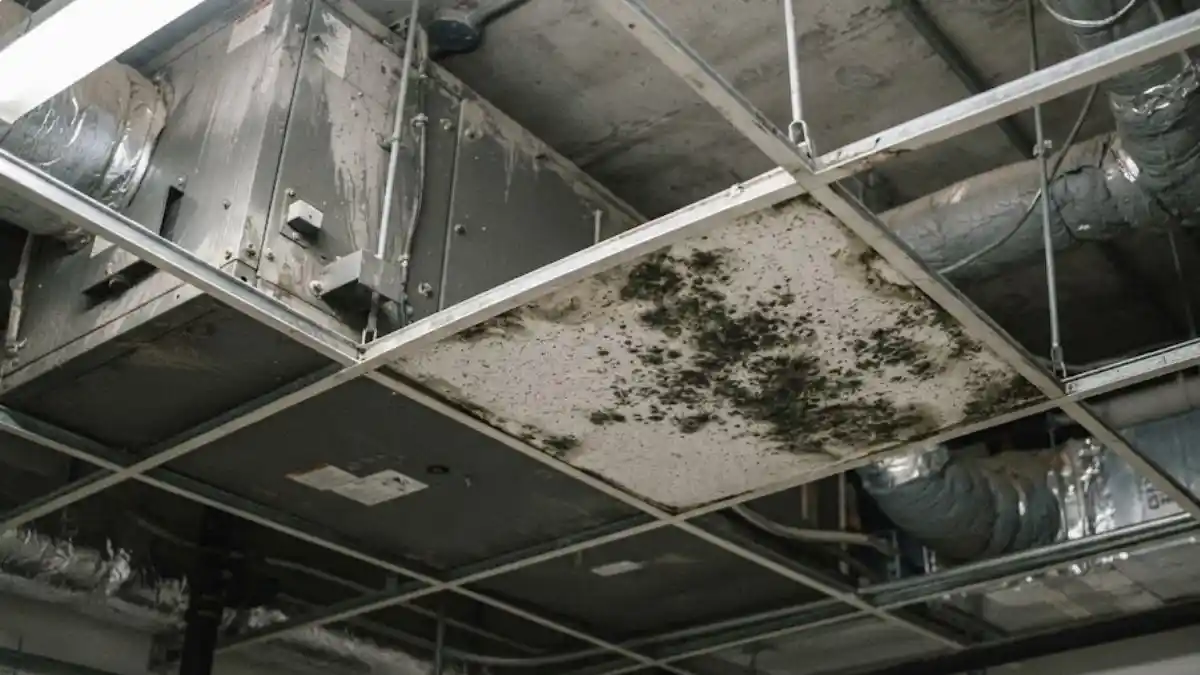
Property managers overseeing commercial office buildings in Fairfax County face a specific mold risk that residential property managers rarely encounter: HVAC-distributed mold after a water damage event. When a water event in a commercial building is not fully dried - or when the drying was adequate for visible surfaces but not for above-ceiling insulation or HVAC components - mold can establish on air handler surfaces and distribute spores to every tenant suite in the air-handler zone before any visible mold is present anywhere in the building.
How HVAC-Spread Mold Develops After Commercial Water Events
The sequence typically looks like this: a water event occurs (sprinkler discharge, roof intrusion, pipe failure above the ceiling). Extraction and visible surface drying are completed. Ceiling tiles are reinstalled. The tenant returns to operations. Three to four weeks later, tenants begin reporting musty odors and respiratory symptoms. Air sampling reveals elevated mold counts in multiple suites. Investigation finds mold colonies on the air handler coil, in the drain pan, and on the fiberglass duct lining adjacent to the air handler. The source was above-ceiling insulation batt that retained moisture after the ceiling tile was reinstalled, or the HVAC system itself, which was running during the water event and drew contaminated air into the distribution system.
For property managers, this sequence represents the most preventable commercial mold scenario: it results from incomplete drying verification after a water event, and it is caught before it begins by moisture mapping above the ceiling grid before reinstalling tiles. If you managed a commercial building water event in the past year and tiles were reinstalled without above-ceiling moisture verification, a precautionary air sampling assessment is advisable. See Mold Inspection & Testing. Call (571) 741-6292.
Virginia Tenant Rights and Landlord Mold Obligations
Virginia's landlord-tenant law requires landlords to maintain rental property in a habitable condition. While Virginia does not have a specific mold statute for commercial leases (commercial leases have more flexibility than residential ones), the general habitability requirement is interpreted to include conditions - including mold - that make a space unsafe or unusable for its intended purpose. Commercial tenants whose workspace is affected by mold after a known water event may have grounds to withhold rent, terminate the lease, or seek damages depending on the lease terms and the facts.
The practical risk management for commercial landlords: document every water event, document the restoration scope and drying verification, and conduct post-remediation clearance testing when mold remediation has been performed. A property manager with complete documentation of prompt, professional remediation is in a significantly stronger position in a tenant dispute than one with no documentation or documentation of inadequate response. This is not legal advice; consult a Virginia commercial real estate attorney for guidance on your specific lease and situation. Call (571) 741-6292 for commercial mold assessment and remediation in the Fairfax County corridor.
What the HVAC Assessment Covers
When we assess HVAC components as part of a post-water-event mold evaluation, we examine: air handler coil fins and drain pan (the most common mold locations), supply and return plenum surfaces, accessible duct sections near the air handler, and supply and return registers in affected zones. Swab samples from coil and drain pan surfaces go to the lab for species identification. If mold is present on HVAC components, the remediation scope includes cleaning accessible surfaces plus coordination with a duct cleaning contractor for the full distribution system. See Mold Remediation for the HEPA containment and negative-air protocol. Call (571) 741-6292.
Post-Remediation Clearance Testing for Commercial Buildings
After mold remediation in a commercial building, clearance air sampling by an independent inspector - not the remediation contractor - is the quality control step that confirms the problem is resolved. Clearance testing compares indoor airborne spore levels to an outdoor control sample; elevated indoor levels after remediation indicate that the remediation was incomplete. For commercial buildings with active tenants, clearance testing provides the documentation that supports tenant re-occupancy and, if the event becomes a dispute, demonstrates that the landlord completed professional remediation with verified results. See Mold Inspection & Testing for the independent testing process. Call (571) 741-6292.
Questions about your situation? Call (571) 741-6292 - Fairfax Restoration Crew serves commercial properties, condos, and multi-unit buildings across Fairfax VA, Fairfax County, and Northern Virginia.