
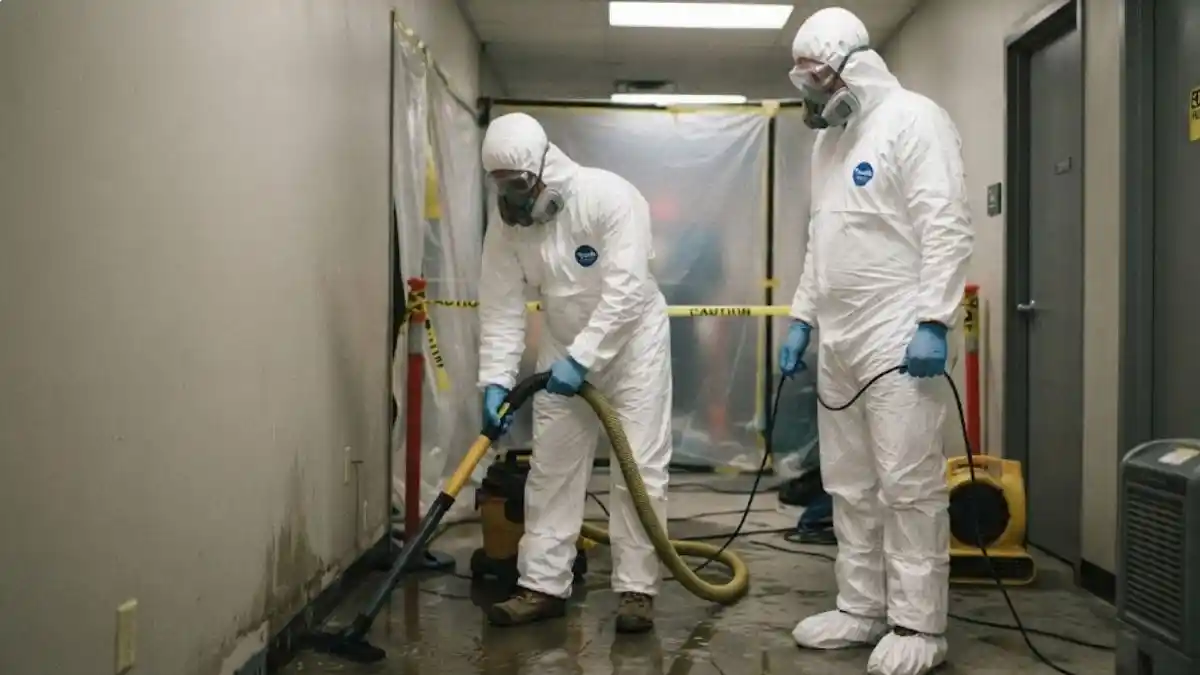
Sewage Backup | Category 3 | Multi-Unit Buildings
Sewage Backup in a Fairfax Multi-Unit Building: Category 3 Water and Why It Is Different
- Fairfax Restoration Crew
A sewage backup event in a Fairfax County multi-unit building - whether a 1960s Annandale garden condo, a 1990s Reston townhome community, or a 2010s Tysons mixed-use building - is categorically different from a standard water damage event. The difference is not a matter of degree; it is a difference in the fundamental nature of the hazard and the protocol required to address it safely.
What Category 3 Water Means in Practice
Under IICRC S500 standards - the industry reference for water damage remediation - water is classified by its contamination level. Category 3 water, which includes all sewage-contaminated water, is defined as water that is grossly unsanitary and poses substantial risk of disease or death if ingested. The specific pathogens of concern in sewage water include coliform bacteria (E. coli), Salmonella, Hepatitis A, and norovirus. These are not theoretical risks - sewage backup events that are not handled with appropriate protocols have caused documented illnesses in building occupants and in cleanup workers who worked without PPE.
In a multi-unit building, this has a specific implication: any water that has contacted sewage-contaminated surfaces is Category 3, regardless of where it originated. In a 1960s Annandale garden condo with a shared sewer stack backup, the water appearing in ground-floor units through floor drains and toilet connections is Category 3. In a Reston townhome where a neighbor's sewer line backed up through a shared lateral, the water entering the neighboring unit through a wall penetration is also Category 3.
Why Multi-Unit Sewage Events Are More Complex
In a single-family home, a sewage backup is contained to one structure with one owner, one insurance policy, and one contractor authorization chain. In a multi-unit building, the same event may simultaneously affect multiple units, involve the building's shared plumbing system (a common element under the HOA master policy), and require coordination with the property manager for access to mechanical rooms, sewer cleanouts, and the building's main shutoff. All of this coordination happens while the Category 3 water is actively present in the building, and the health hazard timeline does not pause for property management paperwork.
The practical sequence for a multi-unit sewage event in Fairfax County: notify your property manager immediately (they control building access and must coordinate the plumber); call (571) 741-6292 for Category 3 extraction; keep people and pets out of affected areas; do not run HVAC in the affected zone; do not attempt household cleaning of the affected area. The plumber clears the blockage first; restoration begins after the blockage is cleared and confirmed not to recur.
The ATP Testing Requirement
After Category 3 cleanup and antimicrobial treatment of all exposed structural surfaces, ATP (adenosine triphosphate) surface testing provides a rapid post-cleaning verification. ATP is present in all biological matter - a high ATP reading on a surface after cleaning indicates that biological contamination is still present, regardless of whether the surface appears visually clean. We test representative surfaces after cleaning is complete and document the results. Surfaces with high ATP readings receive additional cleaning before the restoration phase begins. This testing is included in our scope documentation for the insurance claim.
Insurance Coverage for Sewage Backup
Sewer or drain backup coverage is not standard in most homeowner's policies - it requires a specific endorsement. Condo owner HO-6 policies follow the same pattern. If your HOA master policy covers the shared sewer system as a common element, the structural repair to common areas may be covered under the master policy, but your interior finishes and personal property still fall to your HO-6. Check your policy for sewer backup coverage before assuming it is there. We produce the documentation your carrier needs regardless of coverage determination. See Sewage Backup Cleanup for the complete Category 3 protocol and Water Damage Insurance Claims for the multi-party documentation approach. Call (571) 741-6292.
Questions about your situation? Call (571) 741-6292 - Fairfax Restoration Crew serves commercial properties, condos, and multi-unit buildings across Fairfax VA, Fairfax County, and Northern Virginia.