
Ceiling Water Damage | HOA & Condo | Fairfax County
Water Came Through My Ceiling from the Unit Above: What Fairfax Condo Owners Must Do First
- Fairfax Restoration Crew
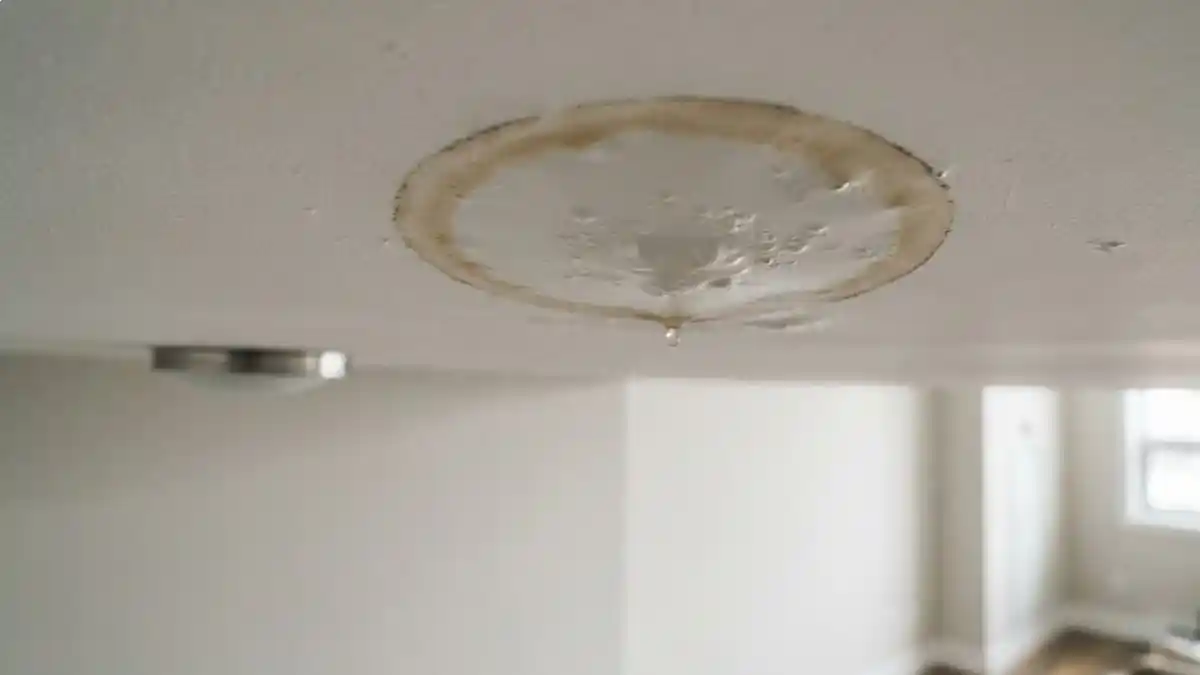
Water dripping through your ceiling in a Fairfax County condo is one of the most disorienting damage events a property owner faces. The source is somewhere you cannot see, in a space you do not control. The water may have been traveling horizontally for several feet through the floor-ceiling assembly above before it found the penetration where it entered your unit. And the timeline that matters for mold prevention - 48 to 72 hours - started the moment the water first reached your structure, not when you discovered the stain.
This guide covers the right sequence for the first hours after you discover ceiling water damage from the unit above in a Fairfax, Reston, Tysons, Annandale, or other Northern Virginia condo community.
Step 1: Document Before Anything Is Touched
Before you move furniture, place buckets, or do anything else, take photographs and video of every affected area. Photograph the ceiling stain from multiple angles, any dripping points, any bubbling or sagging drywall, and any contents that have been affected. This visual record establishes the damage state before any deterioration occurs and before any repair work begins. Your insurance adjuster, the upstairs owner's insurer, and the HOA will all reference this documentation. A phone camera with timestamps is sufficient - the important thing is to have it before anything changes.
Step 2: Move Valuables and Electronics
Water and electronics do not mix - and ceiling water damage often presents near light fixtures and HVAC registers, which are directly above electronics, televisions, and work surfaces. Move anything that can be damaged by water exposure out of the affected area. Do not move items into rooms that show any sign of ceiling dampness. If a ceiling fixture is within the wet area, do not use that circuit until an electrician confirms it is safe.
Step 3: Notify Your Property Manager - Within 24 Hours
Most Fairfax County condo governing documents require notification to the property manager or HOA board within 24 to 48 hours of discovering a water event. This is not optional - delayed notification can affect your claim and your standing under the governing documents. Call your property manager's emergency line immediately. They need to know because they may need to notify the upstairs unit, coordinate plumber access, or assess shared building systems. In Reston, the Reston Association notification requirements may run alongside the sub-HOA notification requirements if shared elements are involved.
Step 4: Try to Identify the Source Without Entering the Unit Above
You do not have the right to enter the unit above. However, you can ask your property manager to contact the upstairs neighbor, and if they are home, ask them to check for an overflowing toilet, running appliance, or visible plumbing failure. The source identification matters for the insurance claim: if water originated from a washing machine supply line in the unit above, that is the upstairs owner's liability to their HO-6 policy. If it came from a shared plumbing stack, the HOA master policy may be involved. Do not delay your own drying while waiting for source confirmation - start drying immediately and sort payment afterward.
| Likely Source | Who Is Usually Responsible | Policy Involved |
|---|---|---|
| Washing machine supply line (unit above) | Upstairs unit owner | Upstairs owner's HO-6 liability |
| Toilet overflow (unit above) | Upstairs unit owner (if negligent); depends on governing docs | Upstairs HO-6; subrogation by your insurer |
| Shared plumbing stack | HOA association | HOA master policy |
| Ice dam (roofline) | HOA association (roofline is common element) | HOA master policy for structure; your HO-6 for interior finishes |
| Unknown / disputed | Determine after plumber assessment | File your HO-6 claim first; insurer subrogates later |
Step 5: Call for Extraction and Moisture Mapping
Call (571) 741-6292 for extraction and moisture mapping. Do not wait for liability to be resolved before starting drying - this is the most common and costly mistake in condo water events. Your HO-6 insurer pays your claim and then pursues the responsible party's insurance through subrogation. Waiting for the upstairs neighbor's insurer to authorize work before you start drying allows the moisture to migrate deeper into the floor-ceiling assembly and potentially into wall cavities, dramatically increasing the eventual claim cost for everyone involved.
Moisture mapping using calibrated meters and thermal imaging establishes the true extent of saturation before any ceiling drywall is removed. In concrete-slab Tysons and Merrifield high-rises, the water may have spread 10 to 15 feet horizontally from the source before entering your unit. In wood-frame Reston garden condos and Annandale garden condos, the water may have wicked into insulation batt across a wider area than the visible stain suggests. The map drives both the drying plan and the insurance documentation.
Step 6: Notify Your HO-6 Insurer
Call your condo insurance carrier to report the event. Most policies require timely notification - "timely" is typically defined in your policy but is usually within a few days of discovery. Have your photographs ready and be prepared to describe the source if known and the affected area. Your insurer will assign an adjuster; they will review our moisture mapping and scope documentation as part of their claim process. See Water Damage Insurance Claims for a detailed description of what the adjuster will need from us.
What the Virginia Condominium Act Says
Virginia's Condominium Act (Virginia Code §55.1-1900 et seq.) establishes the legal framework for HOA insurance obligations in Virginia condominiums. It requires associations to maintain property insurance covering common elements and portions of units that the association is obligated to maintain. The actual boundary between what the master policy covers and what your HO-6 covers is defined by your specific declaration - "bare walls" coverage means the master policy covers the building structure to the wall surface, and everything inside the wall belongs to you. "Original fixture" coverage means the master policy covers original builder-specified fixtures as well. Review your declaration for the specific language. We do not provide legal advice on coverage disputes, but we produce the physical documentation that any coverage determination requires.
The Mold Clock
Mold can begin to colonize porous building materials - drywall paper, wood framing, insulation - within 48 to 72 hours of saturation under typical indoor temperature and humidity conditions. This timeline is why "start drying immediately" is the most important single piece of advice in a ceiling water event. Every hour of delay after the 48-hour window extends the potential mold scope. If your ceiling water event occurred more than 48 hours before you are reading this, call (571) 741-6292 immediately - the assessment will include mold screening of the affected areas.
For a broader overview of ceiling water damage from unit-above events in Fairfax County condominiums, see our service page: Ceiling & Unit-Above Water Damage. For the HOA policy framework, use our HOA vs. Owner Responsibility Checker educational tool.
Questions about your situation? Call (571) 741-6292 - Fairfax Restoration Crew serves commercial properties, condos, and multi-unit buildings across Fairfax VA, Fairfax County, and Northern Virginia.